
Difference Between Fat Loss and Weight Loss: Do They Differ From One Another?
Yes, fat loss and weight loss are different. Weight loss means a reduction in your total body weight, while fat loss specifically means reducing the amount of body fat you carry. If your goal is to look leaner, improve body composition and maintain muscle, fat loss is usually a more useful goal than simply seeing a lower number on the weighing scale.
What Is Weight Loss?
Weight loss is any decrease in your total body weight. For example, if your weight changes from 85 kg to 82 kg, you have lost 3 kg of body weight. However, the weighing scale cannot tell you exactly where those 3 kg came from.
Weight loss may include reductions in:
- Body fat
- Muscle mass
- Water
- Glycogen stores
- Food and waste present in the digestive system
This is why body weight can fluctuate even within a single day. A lower number on the scale does not automatically mean that you have lost the same amount of body fat.
What Is Fat Loss?
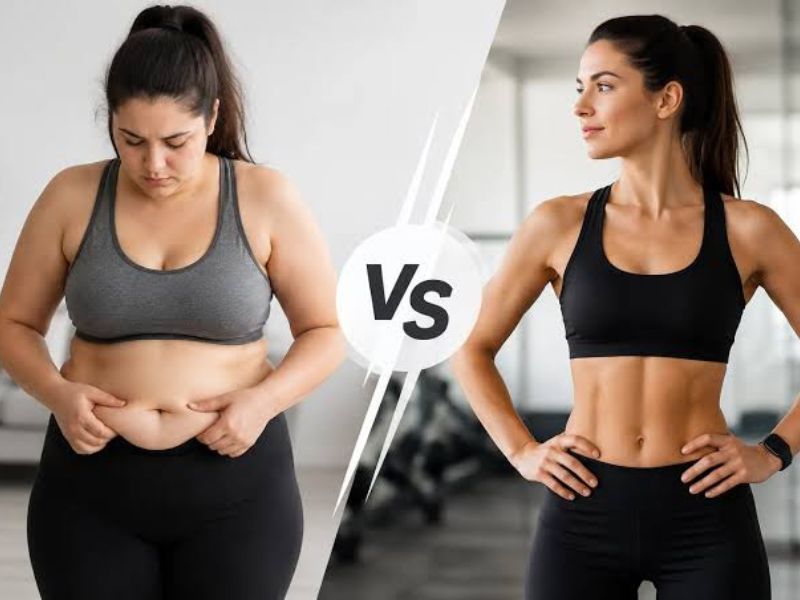
Fat loss refers specifically to a reduction in body fat while ideally maintaining as much lean muscle mass as possible. This changes your body composition rather than simply your body weight.
Imagine two people both lose 5 kg.
Person A: loses mostly fat while maintaining muscle.
Person B: loses a combination of fat, muscle and water.
Both may see the same change on the weighing scale, but their body composition and physical appearance may be very different.
Fat Loss vs Weight Loss: Key Difference
| Factor | Weight Loss | Fat Loss |
|---|---|---|
| What decreases? | Total body weight | Primarily body fat |
| May include water loss? | Yes | Not the main goal |
| May include muscle loss? | Yes | Ideally minimized |
| Best measured by scale? | Yes | Not completely |
| Focuses on body composition? | No | Yes |
| Better goal for getting leaner? | Not always | Usually |
Weight loss = losing overall mass.
Fat loss = reducing body fat while preserving lean tissue as much as possible.
Why Does Your Weight Change So Quickly Sometimes?
One of the biggest reasons people confuse fat loss with weight loss is water fluctuation. Your body weight can temporarily increase or decrease because of:
- Higher or lower carbohydrate intake
- Sodium intake
- Hydration
- Exercise
- Menstrual cycle
- Glycogen levels
- Food still being digested
This means losing 1–2 kg in a few days does not necessarily mean that you have lost 1–2 kg of fat. Looking at trends over several weeks is usually more useful than reacting to one day's scale reading.
Is Fat Loss Better Than Weight Loss?
If your main goal is to become leaner while maintaining strength and muscle, fat loss is generally the better target. The goal should not simply be to make your body lighter.
Muscle contributes to strength, physical performance and overall body composition. During calorie restriction, some lean tissue can also be lost, which is why resistance exercise is commonly recommended as part of a weight-management plan.
Reduce body fat + Maintain muscle + Improve fitness
How Do You Lose Body Fat?
Body fat is reduced when your body consistently uses more energy than you consume over time. In practical terms, this usually means maintaining a calorie deficit while taking steps to preserve lean muscle.
1. Maintain a Moderate Calorie Deficit
You do not need an extreme diet. Gradual weight reduction is generally easier to sustain than aggressive dieting. The CDC notes that people who lose weight gradually, around 1 to 2 pounds per week, are more likely to maintain their progress.
2. Eat Enough Protein
Protein supports muscle maintenance, especially when combined with resistance training.
Useful sources may include milk, curd, paneer, eggs, dal, legumes, soy, tofu, fish, chicken and protein supplements when convenient.
3. Include Resistance Training
Strength training gives your body a reason to retain muscle while you are consuming fewer calories. Squats, rows, presses, deadlift variations, pulling exercises and bodyweight resistance exercises can all be included depending on your fitness level.
How Should You Track Fat Loss?
Do not rely on the weighing scale alone. Tracking several indicators together can give you a better picture of your progress.
Can You Lose Fat Without Losing Weight?
Yes. This can happen during body recomposition, where someone loses fat while gaining muscle at approximately the same time.
Starting body weight: 75 kg
After several months: 75 kg
The scale has not moved, but if fat mass decreased while muscle mass increased, the person's body composition has improved.
Can You Lose Weight Without Losing Much Fat?
Yes. Rapid reductions in weight can sometimes be driven substantially by changes in water and glycogen. This is commonly seen when someone suddenly changes carbohydrate intake, sodium intake or overall food consumption. Dramatic short-term changes on the scale should therefore not automatically be interpreted as equivalent fat loss.
Frequently Asked Questions
Is losing weight the same as losing belly fat?
No. Weight loss refers to total body-weight reduction. Belly-fat reduction requires overall body-fat loss, and you cannot reliably choose exactly where your body loses fat first.
Should I focus on weight loss or fat loss?
If your goal is better body composition, maintaining muscle and looking leaner, focus primarily on fat loss rather than scale weight alone.
Why am I losing inches but not weight?
You may be losing fat while maintaining or gaining some lean mass, or changes in water weight may be masking progress on the scale.
Can strength training help with fat loss?
Yes. Strength training contributes to energy expenditure and can help preserve or build lean muscle during a fat-loss phase.
How fast should I lose weight?
There is no single ideal rate for everyone, but gradual and sustainable weight loss is generally preferred over extreme dieting.
Final Answer
Fat loss and weight loss are related, but they are not the same thing. Weight loss simply tells you that your total body mass has decreased. Fat loss tells you that your body composition is changing through a reduction in stored body fat.
If your goal is to become leaner while maintaining strength, focus less on chasing the lowest possible scale number and more on gradual fat loss, adequate protein, resistance training, sustainable nutrition and long-term consistency.
Don't just ask, “How much weight did I lose?” Ask: “What did I actually lose?”
References
National Center for Biotechnology Information:
https://www.ncbi.nlm.nih.gov/books/NBK84544/
Centers for Disease Control and Prevention:
https://www.cdc.gov/healthy-weight-growth/losing-weight/index.html
American College of Sports Medicine:
https://acsm.org/webinar-qa-effects-of-aerobic-resistance-training-on-food-intake/
NIH Common Data Elements:
https://cde.nlm.nih.gov/formView?tinyId=mkHsqGa3se